Glamping promises comfort in the wild, but first-time campers often arrive missing small items that make or break the stay. A forgotten headlamp, no pillow, or a cooler without ice packs can turn a cozy night in a canvas tent into a frustrating one. Unlike a hotel, a glamping site may not have a front desk to bail you out, and unlike traditional camping, you probably assumed everything was provided. The fix is a checklist tailored to your specific unit and season.
This guide walks through each packing category step by step. We start with how to match your checklist to your glamping trip by checking your unit type and confirming amenities with the host. Then we cover clothing for temperature swings, the bedding and comfort items many sites skip, kitchen supplies for off-grid stays, toiletries and power essentials, and seasonal extras for shoulder months. A quick summary checklist at the end ties it all together so you can pack once and pack right.
Before You Pack: Match Your Checklist to Your Glamping Trip
The single biggest packing mistake is assuming every glamping unit works the same way. A yurt with a wood stove and a safari tent with no heating demand very different clothing choices, and a cabin with a full kitchen means you can skip most cookware entirely. Before you write a single item on your list, confirm what kind of unit you have booked and how it handles cold nights and meal prep.
Confirm your amenities before you pack
Ask the host or check the listing for the essentials: a real bed, linens, electricity, and whether the bathroom is private or shared. If linens and towels are included, leave yours at home. If the kitchen is stocked with plates, a stove and basic cookware, you only need food and a few personal extras. A short message to the host saves you from hauling duplicate bedding or cookware in your car.
Booking timing matters too. Summer weekends at popular sites fill up fast, so book 2-3 months ahead, and up to 6 months for holiday periods. Typical glamping rates range from $100 to $400 per night depending on the unit and location, so it pays to lock in your spot early and know exactly what you are paying for before you start packing.
Clothing and Footwear: Dressing for Temperature Swings
Glamping nights are colder than most first-timers expect. Even in midsummer, temperatures can drop 10-15°C below daytime highs once the sun goes down, and canvas walls hold very little warmth. The solution is simple layering: a breathable base, a warm midlayer, and an outer shell you can add or shed as the evening cools. Think in terms of what you will wear sitting still by a fire at 10 p.m., not what feels right at midday. A good rule of thumb is to pack one extra warm layer beyond what you think you need, because getting up at dawn to use the bathroom is far less pleasant when you are shivering.
Footwear deserves equal thought. Most sites involve gravel paths, grass, and a short walk from the parking area, so sturdy closed shoes are your default. A pair of sandals or slip-ons for inside the tent keeps the floor clean and your feet comfortable. For a typical 2-3 night stay, one spare set of quick-dry clothing covers you if a shirt gets damp or dinner ends up on your sleeve. Choose fabrics that dry overnight rather than cotton, which can stay damp for the rest of a short trip.
- Merino or synthetic base layers: These dry overnight and resist odor better than cotton, which stays damp and cold once temperatures fall.
- A windproof outer jacket: Canvas sites are often open and exposed, and wind chill around the fire makes an otherwise mild evening feel much colder.
- Wool socks and a spare pair: Damp grass and morning dew soak through thin socks quickly, and dry socks are the fastest comfort upgrade in camp.
- Slip-on camp shoes: Something you can step into at the tent door for midnight trips avoids fumbling with laces in the dark.
Bedding and Comfort Items Many Glamping Sites Skip
Bedding is the area where glamping sites vary most, so verify before you pack. Many units include a real bed with linens, but some provide only a mattress or basic bedding, especially at simpler sites. If linens are not included, a sleeping bag liner or a set of double-size sheets solves the problem without much bulk in your bag. A quick message to the host settles the question in minutes, and it is far easier to fix at home than to discover at check-in after dark.
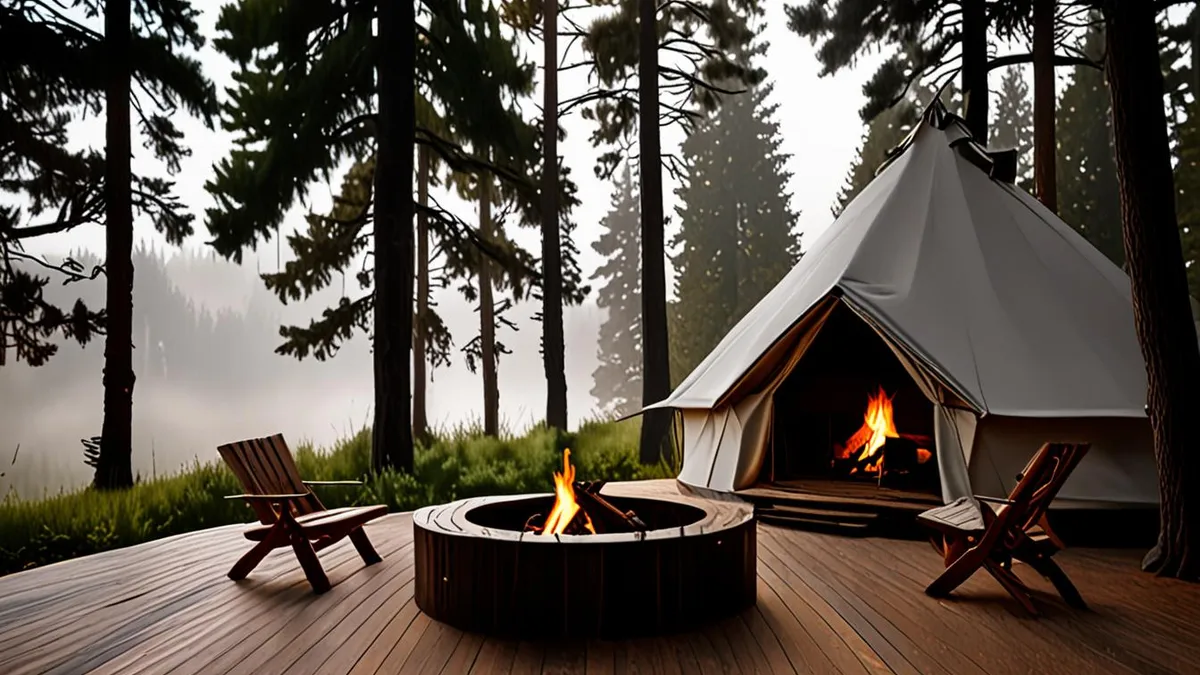
Comfort is also about what canvas cannot block. Tent walls let in early morning light and carry every rustle, hoot and distant dog barking, so light sleepers should plan for it. A small blanket that lives outside your bag gets constant use too, draped over shoulders while you sit outside after dark. Even in summer, evenings turn cool quickly, and the fire is often too good to leave just because the temperature drops.
- A compact travel pillow: Site pillows are often thin or absent, and a compressible pillow takes almost no space and dramatically improves sleep quality.
- An eye mask: Canvas brightens with the first light of dawn, and a mask lets you sleep past sunrise even in a dome with transparent panels.
- Earplugs: Nature is loud at night, from owls to wind in the trees, and foam earplugs weigh almost nothing.
- A spare pillowcase: Useful as an extra layer over a provided pillow, or filled with soft clothing as an improvised pillow if none is supplied.
Kitchen and Food Supplies for Off-Grid Stays
Food is where glamping trips most often go wrong. Many sites sit 30-60 minutes from the nearest town or shop, so a forgotten ingredient means a long drive that eats into your evening. Plan every meal before you leave home, and pre-portion everything: marinate the meat in a freezer bag, measure out pancake mix into a container, and pack vegetables already chopped. This also cuts down on the waste you have to carry back out.
If your unit has no fridge, a cooler with ice packs becomes essential. Pack it in order of use, with items for the last day at the bottom, and keep it in the shade to stretch your ice. Freeze water bottles at home instead of buying loose ice; they keep food cold longer and give you drinking water as they melt.
Even sites with a kitchen often stock less than you expect. A quick message to your host about what is provided saves you from eating cereal with a serving spoon. These are the basics most worth bringing yourself:
- Cutting board and a good knife: shared kitchens frequently have dull knives and no board, which makes cooking anything fresh frustrating.
- Your own coffee setup: a pour-over cone, portable French press or instant coffee sachets, since many sites offer no coffee maker at all.
- Reusable plates, cups and cutlery: some off-grid sites ask guests to minimize disposables, and you will want more than the two plates often provided.
- Trash bags: many sites have no collection service, so you pack out everything you pack in.
- Spices, oil and salt in small containers: the items most often missing and most annoying to do without.
Finally, water. Ask your host directly whether the water on site is potable. If they cannot confirm it, carry bottled water or bring a filter, and assume you will need enough for drinking, coffee and basic cooking for everyone in your group.
A little kitchen planning pays off twice: you spend less time driving to distant shops and more time around the fire, and you avoid the classic end-of-trip problem of unused food you have to haul home.
Toiletries, First Aid and Power Essentials
Glamping bathrooms range from proper en-suite plumbing to a composting toilet in a separate hut, so your toiletry kit should work for the leanest setup. Biodegradable soap and quick-dry towels are the standard here: they are kinder to septic systems and outdoor showers, and a towel that dries overnight in a tent is far more pleasant than a heavy cotton one that stays damp for days.
A basic first aid kit matters more at a glamping site than at a hotel, because you will be walking on uneven ground, building fires and dealing with insects. Blister plasters alone justify the space they take, especially if your days involve hiking in boots you have not worn in months. Add antiseptic wipes or cream, and insect repellent, since canvas tents do not keep mosquitoes out the way a sealed room does.
Power is the other easy thing to underestimate. Outlets in tents and domes are limited or absent entirely, and the one socket by the bed may already be claimed by a lamp. A power bank and the right charging cables keep phones, cameras and e-readers alive for the whole stay. A headlamp or lantern is just as important: once the fire pit dies down, paths between your tent and the bathroom get genuinely dark, and holding a phone flashlight in your teeth is no way to walk on gravel.
- Hand sanitizer: useful when the wash station is a water jug with no soap, or when you are eating between the fire and the picnic table.
- Lip balm and moisturizer: campfire smoke and cool night air dry skin out faster than most people expect.
- Tweezers and tick remover: grassy and wooded sites make both worth having, and a tick remover works far better than fingernails.
- Spare batteries: for your headlamp or lantern, so a dead battery does not leave you lighting your way with a phone.
- Painkillers and any personal medications: the nearest pharmacy may be that 30-60 minute drive away, so bring what you would normally reach for.
Seasonal Extras: Packing for the Glamping Trip Shoulder Months
Shoulder month trips in May and October are some of the best value in glamping, but they demand a slightly different packing list. Add thermal base layers, gloves and a waterproof shell to your usual kit. A base layer you only wear once is still worth its space, because a cold, damp evening can end a trip early if you have nothing warm to change into.
During the peak June-September season, flip the priority: sun protection matters more than warmth. Pack a wide-brimmed hat, sunscreen and light long sleeves. A breathable long-sleeve shirt does more for you than a second t-shirt, protecting arms during long days outside and taking the edge off the evening breeze when the temperature starts to fall.
Rain Gear, Year-Round
Pack rain gear no matter which month you travel. Showers can interrupt even the driest stretch of summer, and a waterproof shell or poncho weighs almost nothing in a duffel bag. A small packable rain cover for your daypack keeps spare clothes and electronics dry too, which matters more when your “closet” is a canvas wall.
Footwear for Wet Ground
Spring and autumn rain turn grass paths and gravel approaches muddy fast, so bring camp shoes that can handle it. Waterproof shoes with some tread beat slick sandals after a wet night, and a cheap pair of slip-on camp shoes lets you leave your walking boots outside the tent rather than tracking mud across the floor. A small mat or old towel by the door helps keep the inside of your unit livable when the weather turns.
Your Glamping Trip Checklist at a Glance
First-time glampers often arrive missing the small items that make or break a stay: a warm layer, a headlamp, the right bedding. This checklist pulls everything together so nothing gets left behind. It covers booking details, layered clothing, bedding, kitchen supplies, toiletries and seasonal extras.
The single most useful step is also the simplest: confirm amenities with your host before you pack. That prevents both duplicate items and awkward gaps in your gear. With nights often 10-15°C cooler than the day and shops 30-60 minutes from many sites, a complete checklist is what turns a glamping trip into a genuinely comfortable stay. If this helped you get ready, share it with your travel companions or drop a comment below.