You want a nature escape in Portugal, but every option looks tempting: vineyard valleys, wild Atlantic beaches, mountain air and island sunshine. The problem is deciding which region actually delivers the best mix of scenery, weather and a genuinely comfortable place to sleep. That’s where glamping in Portugal comes in, and where choosing the right region matters more than choosing the right tent.
This guide breaks the country down by region so you can match your trip to your priorities. We’ll compare glamping with a standard hotel stay, then look at Alentejo’s starry plains, the Douro Valley’s terraced vineyards, the breezy Atlantic coast, and the cooler mountains and islands. We’ll also cover when to book and how to pick a site that lives up to its photos. By the end, you should know exactly which corner of Portugal fits your kind of getaway.
Why Glamping in Portugal Beats a Standard Hotel Stay
Glamping in Portugal solves a problem many travelers run into: you want to wake up surrounded by vineyards, coastline or mountains, but you don’t want to sacrifice a real bed, a hot shower or a proper bathroom. A good glamping site gives you both. You get the outdoor setting and the fresh air, plus en-suite bathrooms, solid beds and, at the better properties, private decks or even your own plunge pool.
What it typically costs
Prices typically run between €90 and €250 per night depending on the region, the season and the level of comfort. That often works out cheaper than a boutique hotel in the same area, especially in scenic spots where small hotels charge a premium for their location. You’re paying for the setting and the privacy, not for a lobby, a restaurant and a pool you may never use.
There’s also the question of atmosphere. Most glamping sites in Portugal are small properties with a handful of units, not sprawling resorts. Outside the busiest weeks, that means quiet evenings, dark skies and the sounds of the countryside rather than poolside music. If you’ve ever stayed in a resort zone and longed for a bit of silence, this is the main reason to make the switch.
Alentejo: Wide Plains, Cork Oaks and Dark Skies
Alentejo is the part of Portugal that many travelers drive through without stopping, and that’s exactly why glampers should stop. The landscape is made of rolling plains dotted with cork oaks, olive groves and wheat fields that turn gold in summer. The region averages over 300 days of sunshine per year, so your chances of dry, clear weather are about as good as they get in western Europe.
Why the night sky is the main event
Thanks to very low light pollution, Alentejo is widely considered one of Europe’s best stargazing regions. On a clear night away from the towns, the Milky Way is visible to the naked eye, and some sites even provide telescopes or stargazing decks. If you’ve only ever seen city skies, this alone can justify the trip.
Accommodation here tends to sit on working farms, so expect safari tents and eco-domes set among the oaks rather than dense clusters of units. Many hosts let you watch farm life go by, and some offer local wine or olive oil from the property. The best window runs from May to October, when the weather is reliably warm and the skies stay clear. Spring brings green fields and wildflowers; late summer and autumn bring golden tones and harvest activity. Either way, pack for warm days and cooler nights, because the plains cool down quickly after sunset.
Douro Valley: Glamping Among Terraced Vineyards
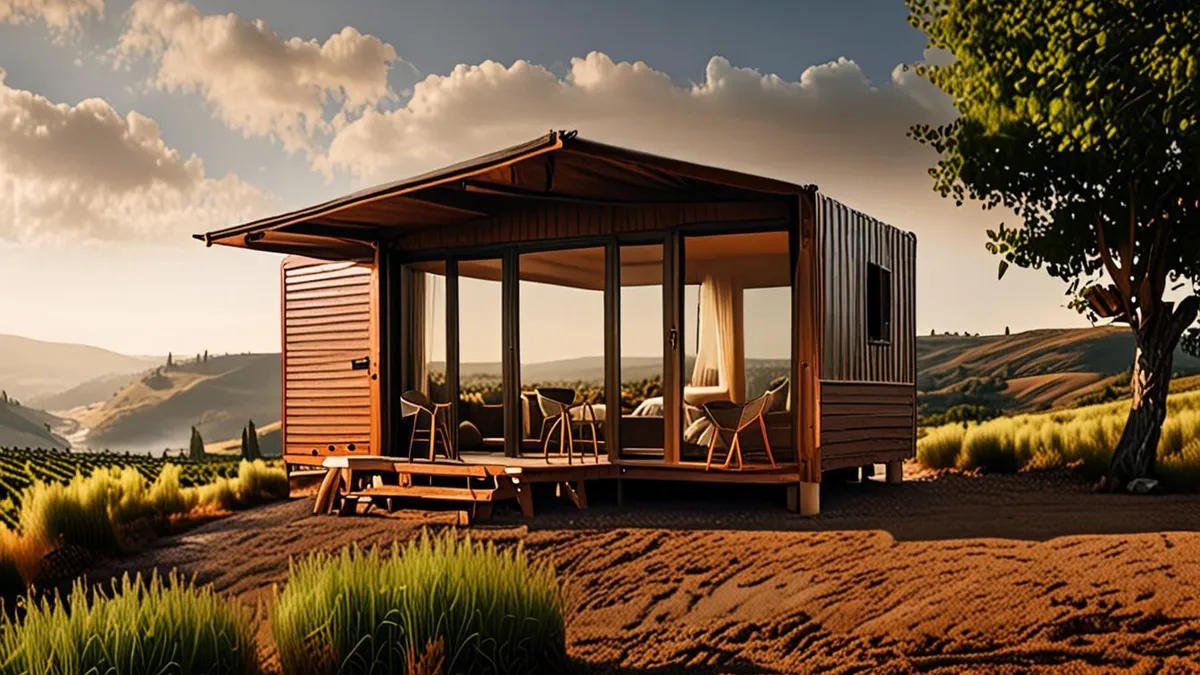
The Douro Valley is Portugal at its most dramatic: steep terraced vineyards carved into the hillsides above a winding river, listed by UNESCO as a cultural landscape. Despite the grandeur, it’s an easy trip from the city. The valley is roughly 1.5–2 hours by car from Porto, which makes it realistic for a two- or three-night glamping break rather than a full relocation.
Timing your visit around the harvest
September and October are the standout months. That’s harvest season, when the terraces hum with activity and the valley colors peak — deep greens shifting to copper and gold. The weather is usually warm and stable, and the grape-picking atmosphere gives the region a energy you won’t find in midsummer. Book early for these weeks, because they’re the most in-demand.
When choosing where to stay, prioritize lodges and domes with valley-facing terraces. The whole point of the Douro is the view, and a terrace angled toward the river gives you sunrise mist over the vineyards, one of the region’s signature sights. Sites spread across the upper and lower valley offer different characters: closer to Pinhão you’re in the heart of wine country, while further upstream feels quieter and more remote. Whichever you pick, check the drive time to the nearest village for dinners, and ask whether the site arranges tastings or river trips — many do, and it saves you planning a designated driver situation on narrow country roads.
Algarve and the Atlantic Coast: Sea Breezes Without the Resort Crowds
Most travelers picture the Algarve as wall-to-wall resorts, but head inland or west and the story changes completely. The western Algarve and the Costa Vicentina coastline catch steady Atlantic breezes, so even in July and August, when resort towns can exceed 30°C, you’ll often sleep comfortably under a light blanket. The landscape here is wilder too: windswept cliffs, pine forests and quiet fishing villages instead of high-rise strips.
Timing makes a big difference along this coast. Spring and autumn are the sweet spots, with warm days good for swimming and far fewer people sharing the beaches and cliff paths. In these months you can walk sections of the coastal trails, watch surfers at quieter breaks and still find a table at a small village restaurant without booking ahead.
Where you pitch matters as much as when. For a true glamping experience, skip the beachfront resorts and look for sites with a bit of elevation or tree cover. A few things worth prioritizing:
- Cliff-top sites give you ocean views and constant airflow, which keeps tents cool on hot afternoons and cuts down on evening mosquitoes.
- Pine-forest sites offer natural shade and that distinctive resin scent, plus softer ground underfoot than exposed coastal scrub.
- Distance from the beach road matters more than distance from the sand; sites a short drive or walk inland are noticeably quieter at night.
- Wind exposure is worth checking in reviews, since Atlantic gusts can rattle lightweight domes and make outdoor dining tricky on open headlands.
Mountains and Islands: Serra da Estrela, Madeira and the Azores
When summer heat pushes you away from the coast, Portugal’s mountains and Atlantic islands step in. Serra da Estrela, the country’s highest mountain range, stays noticeably cooler than the lowlands, making it a natural summer escape. Sites above 1,000 m give you crisp nights even in July, along with glacial valleys, shepherd villages and the famous local cheeses.
Island options: Madeira and the Azores
Both archipelagos sit about a 1.5–2.5 hour flight from Lisbon and enjoy mild temperatures year-round, so glamping here doesn’t follow the mainland’s summer-only rhythm. Madeira brings dramatic levada walking trails and terraced hillsides; the Azores offer crater lakes, hot springs and some of the greenest landscapes you’ll see anywhere in Europe.
Accommodation tends toward geodesic domes and small mountain lodges rather than large tented camps. Expect wood-burning stoves or good heating in the mountains, and on the islands, structures built to handle wind and rain. Pack layers wherever you go in this section of the country: island weather changes fast, and a sunny morning can turn to mist by lunchtime, especially at altitude. A light rain jacket is worth the suitcase space even in high summer.
When to Book and How to Choose Your Site
Glamping sites in Portugal are small by design, often just a handful of units on a farm or hillside, so the best spots fill up quickly. A little planning goes a long way, and knowing what to check before you pay saves real disappointment on arrival. The good news is that the process is simple if you work through a few steps in order, from choosing dates to confirming the details that matter most for your comfort.
- Pick your dates first, then book backwards. For July and August stays, reserve 3–6 months ahead; small properties may only have four or six units, so they sell out early. In the shoulder months, booking 1–2 months ahead is usually enough.
- Confirm what’s actually included. The difference between a basic stay and a premium one often comes down to an en-suite bathroom, heating or air conditioning, and kitchen access. Some budget sites share bathroom blocks; some high-end domes include plunge pools or private decks. Read the unit description carefully, not just the overall property listing, and check whether meals or equipment hire cost extra.
- Read recent reviews with specific questions in mind. Look for mentions of noise from nearby roads or farm animals, the state of the access track (some sites sit down long dirt roads), and shade around the units. Photos are usually taken in perfect spring light and often hide summer heat or exposed, treeless locations.
- Message the host before booking if anything is unclear. Small owners tend to respond quickly and can tell you which unit has the best shade, the quietest position or the easiest access.
Once you’ve found a site that ticks your boxes, don’t overthink it. Availability at the most popular properties can shift week to week, and a confirmed booking with a clear cancellation policy beats a perfect option you keep postponing.
Wrapping Up Your Portugal Glamping Plan
Each region in Portugal brings its own flavor to a glamping trip. Choose Alentejo for stargazing and sunshine, the Douro Valley for vineyard scenery, the west coast for sea breezes, and the mountains or islands for cooler air. Your best pick really comes down to whether you want dark skies, river views, ocean air or mountain quiet.
Timing matters as much as location. The shoulder seasons of May, June, September and October offer the best balance of weather, prices and availability, while booking 3–6 months ahead secures the top sites for peak summer. Whichever region you choose, you’ll trade cramped hotel rooms for wide-open landscapes and still sleep in a proper bed. If you’ve glamped in Portugal or have a favorite spot, leave a comment or share this article with a fellow traveler.