Coordinating dates, budgets and sleeping arrangements for eight or more people turns a simple lodge booking into a logistics puzzle most first-timers get wrong. One friend changes the dates, another drops out, and suddenly the quote you received no longer applies. Learning how to book a lodge for a group is mostly about sequence: fixing the right details before you contact anyone, then asking the right questions before money changes hands.
This guide walks through the whole process step by step. We cover how to get organized before your first inquiry, how to choose a lodge type and location that fits your trip, what a group stay actually costs, when to reserve, and how deposits, contracts and cancellation terms work. We finish with the practical questions to ask the lodge before you confirm, plus a quick summary you can follow from start to finish.
How to Book a Lodge for a Group Trip Without the Usual Headaches
Before you send a single inquiry, get two things locked down: the headcount and the date range. Group quotes depend on both, and a lodge cannot give you a meaningful price for “sometime in summer, maybe ten of us.” Count the people who have actually confirmed, not the ones who said “sounds fun” in the group chat. If your numbers are fuzzy, ask for a quote based on your realistic maximum so you know the ceiling.
Next, decide early whether you need one large lodge or two adjacent units. Availability differs sharply between the two: a single property sleeping your whole group under one roof is far scarcer than two neighboring units, especially for peak dates. If your group is at the larger end, splitting across two units may open up far more options and can sometimes work out cheaper.
One point of contact, one conversation
Nominate one person to handle all communication with the lodge. When three different group members email the same property with slightly different dates and headcounts, quotes get confused and you can even lose a held slot. One contact person, one email thread, one set of numbers. Everyone else can weigh in internally, but only the nominated booker talks to the property. This single habit prevents more group booking headaches than any other.
Choosing the Right Lodge Type and Location for Your Group
The best lodge for your group depends on why you are going. Match the setting to the trip purpose: forest lodges suit quiet retreats, wellness weekends and groups who want to switch off, while mountain lodges suit hiking crews in summer and ski groups in winter. If your trip is built around a forest escape, our guide to forest lodges in the Ardennes for nature lovers is a good starting point for what to expect from that kind of setting.
Location matters more than most groups expect. A lodge that looks central on the map can still sit an hour or more down a narrow forest road, so check actual driving distances to trailheads, airports or town centers. Remote lodges can add 1-2 hours of transfer time each way, which eats into a weekend fast. Map the drive from the airport or the nearest town yourself rather than trusting the listing’s vague description.
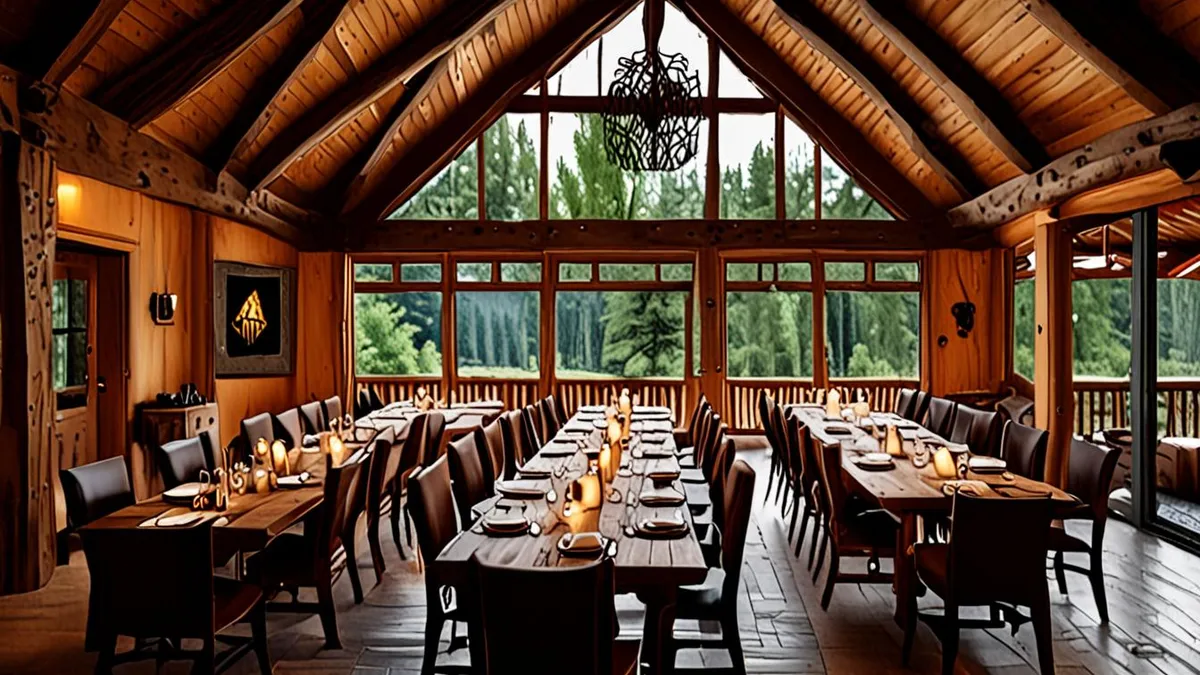
Finally, verify the lodge actually offers the communal spaces your group will live in. A lodge that sleeps everyone but has no shared room forces people into their bedrooms by evening. Before you commit, confirm the property has:
- A shared dining room with a table that seats your whole group at once, so meals become the social center of the stay rather than a split between shifts.
- A lounge or common room with enough seating for everyone, ideally with games, a fireplace or a screen for group evenings.
- An outdoor terrace, fire pit or garden area where the group can gather in good weather, which effectively doubles your communal space.
If any of these are missing, ask how the group is expected to spend its evenings before you assume the layout works.
Budgeting: What a Group Lodge Stay Actually Costs
Group lodge pricing is more predictable than most people fear. At budget-to-midrange properties, per-person rates usually run roughly $50-150 per night, with luxury lodges sitting well above that range. If you want a benchmark for a specific region, our price guide to lodge costs in Scandinavia shows how rates vary by country and season.
Build the total from beds, not rooms
Calculate your total using beds, not rooms. A lodge that “sleeps 16” at one price may require you to book four rooms, while another charges per bed and lets you fill shared rooms. Once you have a bed-based total, add a 10-15% buffer for extras like catered meals, activities, towels or local tourist taxes. Groups almost always spend more than the headline rate, and the buffer keeps the budget honest.
Per person or per room?
Ask explicitly whether the lodge charges per person or per room, because this can change the total by 20% or more. A per-room quote looks cheap until your group of twelve needs six rooms, while a per-person quote may penalize couples sharing a bed. Get the pricing model in writing with your quote, then run the math for your exact headcount before comparing properties. The cheapest-looking lodge is often not the cheapest once the pricing structure is applied to your group.
When to Book: Lead Times and Season Windows
Group bookings live and die on timing. A lodge that sleeps 20-30 guests has a limited number of dates that work for a whole party, and those dates disappear fast in high season. For peak season group stays, aim to reserve 6-12 months ahead. In ski regions that peak window runs December-February, and in summer destinations it runs June-August. Large lodges sell out first because there are simply fewer of them on the market than standard rooms.
Shoulder-season dates are far more forgiving. In most regions, May, September and October fall into this category, and you can typically book 3-4 months out without much stress. The savings are real too: shoulder-season rates often come in 20-30% lower than peak prices, and you may find more flexible terms simply because the lodge has availability to spare.
One more timing detail catches groups off guard: minimum stays. Many lodges apply minimum stays of 2-3 nights for group reservations, especially on weekends and holidays. Build that into your date range from the start, because a two-night minimum can rule out a lodge entirely if your group only planned a single overnight.
- Ask the lodge whether your dates fall into high, mid or low season pricing, since some properties split the year into three rate bands rather than two.
- If your dates are fixed by an event like a wedding or a race weekend, book even earlier than the usual lead time, because everyone else attending that event is competing for the same lodges.
- Check whether midweek arrivals dodge the minimum-stay rule, as some lodges only enforce 2-3 night minimums over weekends and public holidays.
- Ask to be waitlisted for your preferred peak dates even after you book an alternative, since group cancellations do happen and a smaller group may free up the large lodge you wanted.
Deposits, Contracts and Cancellation Terms
Once you have a verbal yes from a lodge, the paperwork becomes the real booking. Most group bookings require a deposit at reservation, with the balance commonly due 30-60 days before arrival. Confirm both deadlines in writing before you send any money, because some properties also add a damage deposit or a cleaning fee on top of the room total. Ask exactly how and when each payment is due so nobody in your group is caught off guard.
Get the terms in writing
Never rely on a phone call for cancellation terms. Ask the lodge to email the policy, and read it closely: is the deposit refundable, or only transferable to new dates? A transferable deposit is far more valuable for groups, since shifting a trip by a few months is much easier than losing hundreds of dollars. Also check what happens if your headcount drops between booking and arrival, as some lodges charge for the original number of beds rather than the final one.
Collect money from your group early
The deposit usually comes from one person’s card, so treat that person as a short-term lender. Collect individual shares from group members as soon as the deposit is paid, not the week before the balance is due. One non-payer can hold up the whole booking, and chasing a dozen people for money at the last minute is nobody’s idea of a fun trip. A simple shared spreadsheet with names, amounts and payment dates solves most of this.
If you are still weighing destinations, location affects both price and availability, so it pays to research early. For example, if the Scottish Highlands are on your shortlist, this guide to the best areas to book a lodge in the Scottish Highlands breaks down where groups tend to get the best value.
Questions to Ask the Lodge Before You Confirm
A lodge can sound perfect over email and still disappoint half your group on arrival. The gap usually comes down to details nobody asked about. Before you confirm and pay the balance, put a short list of questions to the lodge and get the answers in writing so there is no room for misunderstanding later.
Start with sleeping arrangements. A listing that says “sleeps 12” may count a sofa bed, a bunk room or a mattress on a mezzanine, and some group members will not accept those. Ask for the actual bed configuration: how many proper double beds, how many singles, which rooms have en-suite bathrooms and whether couples can be paired sensibly.
Next, sort out food. Catering arrangements make or break a group stay, and assumptions here cause the most friction. Then think through logistics on the ground, from cars to noise, especially if the lodge sits near other properties or in a small residential area.
- Ask whether towels and bed linen are included for every guest, or whether larger groups pay a linen fee or must bring their own bedding.
- If you plan to self-cater, confirm the kitchen setup: oven capacity, number of burners, cookware for your headcount and whether there is a dishwasher.
- Check whether the lodge offers in-house catering or can recommend a local cook, and whether dietary needs such as vegetarian or gluten-free meals can be accommodated.
- Count your vehicles against the parking capacity, since remote lodges sometimes have space for only a handful of cars despite sleeping a large group.
- Ask about step-free access, ground-floor bedrooms and bathroom grab rails if any group members are less mobile.
- Request the quiet-hours rules in writing if neighbors are close, so nobody in your group accidentally triggers a complaint or a penalty.
Your Group Lodge Booking at a Glance
Booking a lodge for a large group only becomes manageable when you break it into steps. Fix your headcount and dates first, then pick a property whose setting and size genuinely fit the purpose of your trip. That single decision makes every later conversation with the lodge easier, because quotes and availability depend on those two details.
From there, the numbers fall into place: work out a realistic budget, lock in your dates well ahead of peak season, and get the deposit terms in writing before you commit. Before paying the balance, confirm the bed configurations, catering options and practical logistics like parking and accessibility. Do that, and what usually trips up first-timers becomes a straightforward checklist rather than a last-minute scramble. If this guide helped you plan your own group trip, leave a comment or share it with someone who’s organizing the next one.