Booking a glamping trip for the first time is exciting right up until the questions start. Will you get a real bathroom, or a shower block a short walk away? Is there anywhere to cook, or should you plan on eating out every night? Many first-time glampers book on photos alone and only discover at check-in that their “luxury tent” is a mattress on a platform with a lamp.
This guide breaks down glamping site facilities so you know exactly what to expect before you pay. We’ll cover the full spectrum of accommodation types, what’s inside your unit from beds to heating, how bathrooms and kitchens work, the shared extras like fire pits and hot tubs, and how facilities scale with price. By the end, you’ll be able to read any listing and know precisely what you’re booking.
What Counts as Glamping? The Facility Spectrum
Glamping covers a wide range of accommodation, and the facilities you get depend heavily on where your unit sits on that spectrum. At the canvas end, safari tents and bell tents give you a proper tent structure paired with real beds and furniture. Move up the scale and you’ll find yurts, then cabins and lodges that approach hotel comfort with solid walls, insulation and full utilities.
At the basic end of glamping, expect a proper mattress with bedding, lighting and some form of heating. That alone separates it from camping, where you’d be inflating a sleeping mat and hoping the ground stays level. At the luxury end, you may find en-suite bathrooms, a kitchenette, a private deck and extras like a wood-fired hot tub.
Glamping vs camping: what actually changes
The key difference is that a glamping unit arrives furnished. Unlike a campsite pitch, where you bring your own tent, sleeping bags and cooking stove, everything you need to sleep is already set up when you arrive. You don’t need to pack sleeping gear or cooking equipment as standard, which is why glamping works well for travelers who don’t own camping kit or who are flying in.
That said, “furnished” covers a range. Some units are essentially a bed and a lamp under canvas, while others feel like a small apartment. Knowing which end of the spectrum you’re booking is the first step to avoiding surprises.
Beds, Heating and Electricity Inside Your Unit
The first thing to check in any listing is sleeping capacity. Most glamping units sleep 2-4 guests, usually built around a real double or queen bed with a proper mattress, duvet and pillows. Family lodges often accommodate 4-6, adding bunk beds or singles alongside the main bed. If you’re traveling with children, ask whether the extra beds are proper frames or fold-outs.
Electricity and lighting come as standard in nearly all glamping units, and that’s one of the biggest comfort upgrades over regular camping. You can charge phones, read by lamplight and, in many units, run a small heater without a second thought. Some canvas units run on a limited power supply, though, so skip high-draw appliances like hair dryers unless the listing confirms they’re fine to use.
How your unit stays warm
Heating depends on the unit type. Bell tents and yurts typically rely on a wood-burning stove, which creates wonderful atmosphere but needs lighting each evening and may burn down overnight. Cabins and lodges usually have electric radiators or something similar, so warmth stays constant with no effort on your part.
Shoulder-season stays deserve extra attention here. In the cooler months at the start and end of the season, nights can turn genuinely cold, and a tent with thin canvas loses heat fast once the stove goes out. Ask the site what heating is provided and whether extra blankets are included. It also pays to check a practical glamping packing checklist before you leave home, since warm layers, thick socks and slippers make canvas accommodation far more comfortable on chilly nights.
Bathrooms: En-Suite vs Shared Facilities
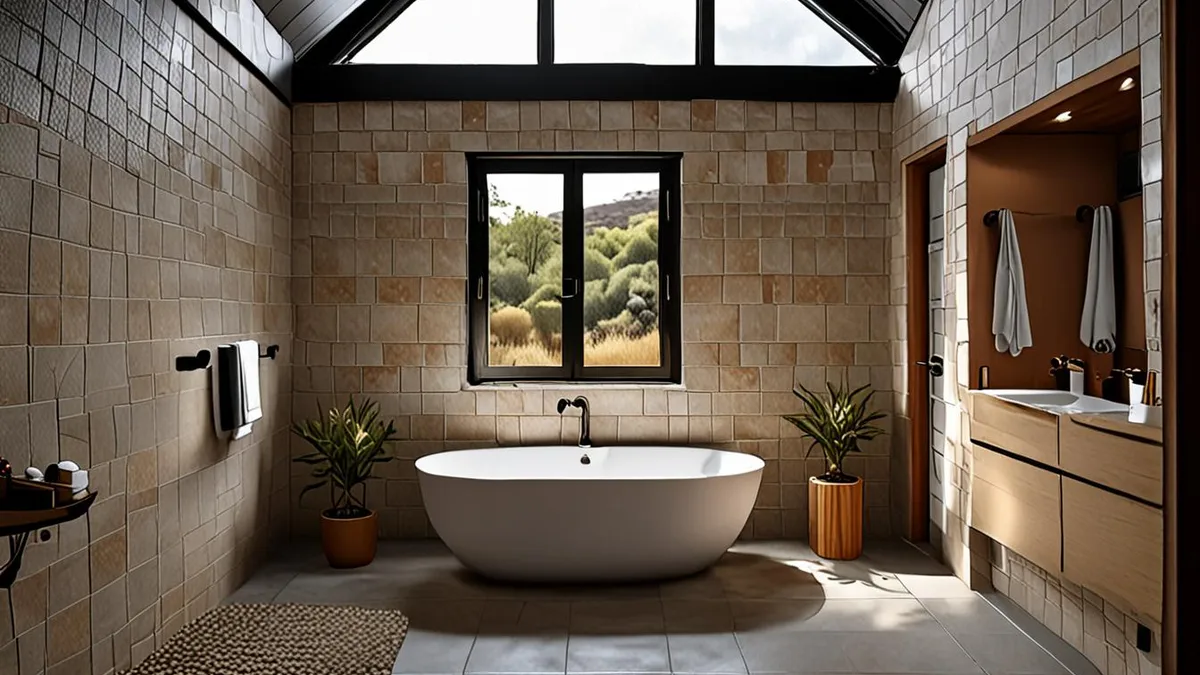
Bathrooms are where glamping sites differ most, and where disappointed reviews tend to come from. En-suite bathrooms appear in roughly 40-60% of glamping units, with the rest using shared facilities. As a rule, en-suites are standard in cabins and lodges and appear in high-end safari tents, where the bathroom is built into the tent structure or attached as a solid-walled extension.
If your unit has no en-suite
Units without a private bathroom use a shared bathroom block, usually located 20-60 meters from the tent. These blocks normally have hot showers, toilets and sinks, and at well-run sites they’re cleaned daily. Quality varies, though, so it pays to look beyond the photos and ask specific questions.
When comparing options, check two things: how far the block is from your unit, and how many units share it. A block serving four tents feels very different from one serving fifteen, especially at peak breakfast-and-shower time. A middle-of-the-night trip across a wet field in October is also a different experience from a thirty-second stroll, so if private facilities matter to you, filter for en-suite units from the start rather than hoping for the best.
Kitchens, Cooking and Dining Options
One of the biggest differences between glamping sites is how they handle food, and this is where first-timers often get caught out. Some sites expect you to self-cater exactly as you would on a camping trip, while others feed you entirely. Before you book, work out which type of setup you are actually getting.
Most sites with a self-catering option provide a shared kitchen block. These typically include a fridge, a hob, a kettle and basic cookware, plates and cutlery. They are usually shared between several units, so expect to wait for the hob at peak dinner time and bring your own specialty items like a good knife or a coffee maker if those things matter to you.
Private kitchenettes and full kitchens
Step up a level and many units come with a private kitchenette inside. This usually adds a two-ring hob, a small fridge and a sink, which is enough to cook proper breakfasts and simple dinners without leaving your tent or cabin. Luxury lodges may offer a full kitchen, sometimes with an oven and decent counter space, which puts them close to apartment-level convenience.
The third option is no cooking at all. Plenty of sites skip self-catering entirely and instead offer breakfast baskets delivered to your door, an on-site café or dinner options at nearby restaurants. This can be a real highlight, but it changes your budget and your daily routine. Decide your cooking plan before booking: if you want to prepare your own meals, confirm the kitchen situation in the listing; if you would rather someone else do the work, check what food is actually available on site or within driving distance, especially in quieter months when local restaurants may have limited hours.
Shared Extras: Fire Pits, Hot Tubs and On-Site Amenities
Beyond the essentials of bed, bathroom and kitchen, the shared extras are often what turn a good glamping stay into a memorable one. The most universal of these is the fire pit. Communal fire pits, BBQ areas and outdoor seating are common across nearly every type of site, and there is something about an open flame that makes evenings feel special whether you are in a bell tent or a lodge.
Firewood is a detail worth checking. Some sites include it in the price, others sell it on site, and a few expect you to bring your own. If a campfire is central to your plans, ask before you arrive rather than discovering the nearest wood source is a half-hour drive away.
Mid-range and luxury sites frequently add wood-fired hot tubs, pools or saunas. These are wonderful, but they often need advance booking slots, especially on small sites where one tub serves all the guests. Mention it when you book rather than hoping for a free slot on a Saturday evening.
What larger and smaller sites typically offer
Scale makes a big difference to what you will find on site. Larger sites often spread their facilities across several areas, while smaller sites trade amenities for peace and quiet. Things you may encounter include:
- Laundry rooms with washers and dryers, useful on stays longer than a few nights or after rainy hikes
- Wi-Fi, which ranges from full coverage across the site to a signal that only reaches the reception area or café
- Playgrounds and open grass areas that keep children occupied, a common feature on family-oriented sites
- Small farm shops or honesty stores selling basics like milk, eggs, coffee and local produce, handy when the nearest supermarket is a drive away
If seclusion is your priority, a small site with fewer amenities may suit you better than a resort-style one. If you are traveling with kids or planning a longer stay, the opposite is true. Match the amenity list to how you actually plan to spend your days.
How Facilities Vary by Stay Type and Price
Glamping facilities scale with price more predictably than almost anything else about a site, which makes budget a useful filter when you are comparing options. The price bands are fairly consistent across Europe, so you can roughly predict what you will get before you even open a listing.
What the budget and mid bands get you
At around €80-150 per night, expect a furnished tent with real beds, lighting and heating, plus shared bathroom blocks and a shared kitchen block. This band covers most bell tents, yurts and standard safari tents, and it delivers the core glamping experience: comfort without the hotel price tag. The trade-offs are usually the walk to the shower block and cooking in a communal kitchen.
At €200-400+ per night, expectations change. In this band you should look for en-suite bathrooms, private kitchenettes, hot tubs and often breakfast included. Cabins and luxury lodges dominate here, and many add private decks, better insulation and more space per guest. For a fuller breakdown of what each price level typically includes, this glamping price guide by stay type lays out the bands in detail.
Matching facilities to your priorities
Price is only half the equation; the other half is what you actually value. If privacy and your own bathroom matter most, point your search at cabins and lodges, where en-suites are standard rather than an upgrade. If atmosphere and budget lead your list, bell tents and yurts deliver the canvas-and-campfire feeling at a lower price, and a well-kept shared bathroom block is a modest price to pay for it.
A practical approach: shortlist a few sites in your price range, then compare their facility lists line by line rather than their photos. Photos flatter everything; a facility list tells you whether you will be showering twenty meters from your tent or stepping into your own en-suite at midnight.
Checking Facilities Before You Book a Glamping Site
Glamping listings vary enormously, and the difference between a great stay and a disappointing one usually comes down to details buried in the unit description. Photos can make a basic tent look luxurious, and vague wording like “facilities nearby” can hide a long walk to a cold shower. A few minutes of careful reading before you pay the deposit will tell you almost everything about what you’ll actually get, so treat the listing like a checklist rather than a brochure.
- Check the bathroom situation first. Look for the words “en-suite” or “private bathroom” in the listing. If they’re not there, assume you’ll be using a shared block, and ask how far it is and how many units share it.
- Confirm the heating type. A wood-burning stove sounds charming but means you’ll be lighting fires yourself; an electric radiator is simpler. For stays in April, May or October, ask what’s provided when nights drop below 10°C.
- Clarify kitchen access. Does your unit have a private kitchenette, or do you share a kitchen block? If neither, check whether breakfast or a café is offered so you can plan meals.
- Verify bedding and towels. Most units include real beds made up with bedding, but towels and firewood are sometimes extras. Check what’s listed and pack accordingly.
- Book early for summer. For July-August stays, book 3-6 months ahead, because the best-equipped units sell out first. In shoulder season, 4-8 weeks is often enough.
- Confirm check-in and check-out times. Check-in is usually from 3pm and check-out by 11am at most sites, so plan your travel around those windows.
It also pays to message the host directly with two or three specific questions before booking. A quick reply that answers exactly what you asked is a good sign; a vague or evasive answer usually isn’t. Ask about the bathroom distance, the heating setup for your travel dates and whether towels are included, then compare the answers side by side.
If you’re weighing up several sites and still unsure how to compare them, our guide on how to choose the right glamping site for your first trip walks through the decision step by step. Once the four key details are confirmed, you can book with confidence.
The Bottom Line on Glamping Site Facilities
So what should you expect at a glamping site? The honest answer is that facilities range from a real bed in a canvas tent with a shared bathroom block, all the way up to en-suite bathrooms, private kitchenettes and wood-fired hot tubs. The key is that facilities scale with price: at around €80-150 per night you get comfort basics like proper bedding, heating and a shared kitchen, while €200-400+ typically buys private bathrooms, self-catering space and extras like breakfast or a hot tub.
That means the mystery is easy to solve before you book. Check the four details that matter most — bathroom, heating, kitchen and bedding — and match the facility list to your own priorities. Doing that turns a first glamping trip into a good one. If you have questions or a glamping story of your own, leave a comment or share this article.